
README.md
Inference Capital Markets: A New Model for Funding Compute
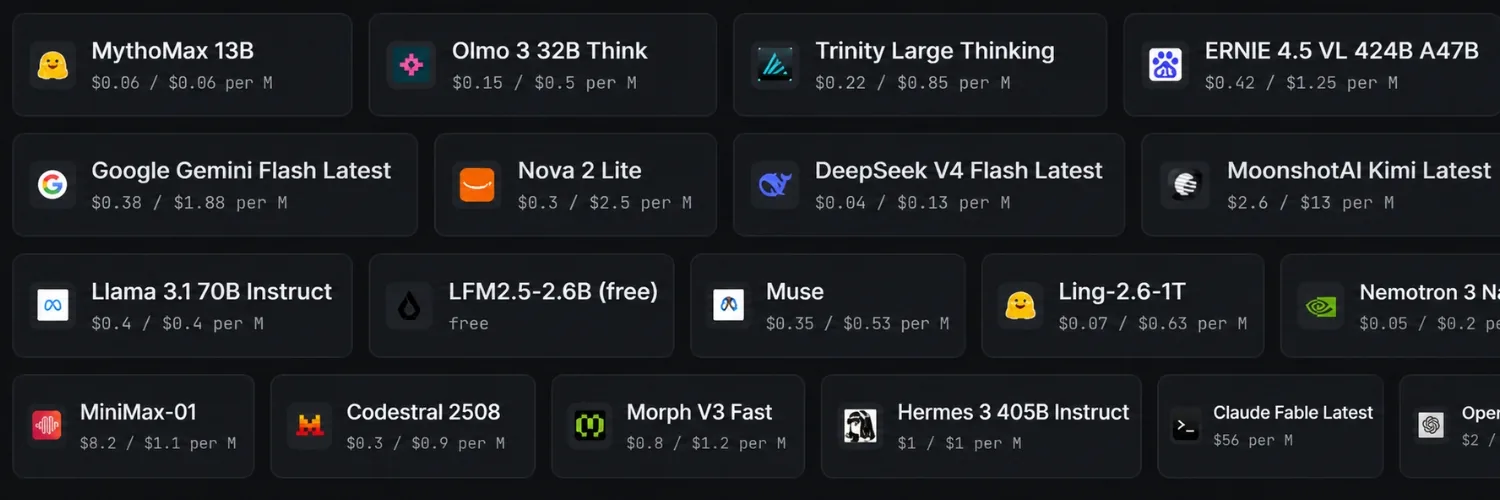
AI is becoming a permanent layer of the internet. Models are getting better at writing code, generating images, analyzing information, reasoning through problems, and powering entirely new classes of software. As this continues, the amount of compute required to support all of that intelligence will grow with it.
Every response requires compute. Every agent consumes inference. Every product built around a model eventually has to answer the same economic question:
who pays for the intelligence?
Capital markets are going to become part of that answer. $RENTAPI is an experiment in an inference capital market, where activity around $RENTAPI generates the capital used to continuously purchase compute for the people who hold it. Every $RENTAPI trade generates creator rewards, those rewards are collected into a treasury, and that treasury funds AI inference. Hold at least 10,000 $RENTAPI and that inference becomes available to you.
$RENTAPI activity
every trade
creator rewards
30 bps
treasury
on-chain
compute
any model
access is the reason to hold, and holding is what trades
Compute is becoming an economic resource
For most of software history, computation was cheap enough that the marginal cost of an individual interaction rarely mattered. AI changes that because models consume resources every time they run. A single request might cost very little, but persistent agents, large workloads, image generation, vision, long-context reasoning, and automated systems can produce enormous amounts of inference demand.
As AI becomes embedded into more software, access to intelligence starts looking less like a feature and more like an economic resource. An agent operating continuously needs a budget. A product serving millions of model requests needs a budget. Someone has to finance the compute underneath all of it.
That is where crypto becomes much more interesting. A market can generate capital, that capital can purchase compute, and that compute can power software. Once those pieces are connected, software can begin to exist with a financial engine underneath it rather than relying entirely on subscriptions, venture capital, or someone manually topping up an API account.
$RENTAPI turns activity into inference
Every time $RENTAPI trades, creator rewards are generated. A keeper checks for those rewards approximately once a minute and claims them into the treasury, where they become capital available to finance inference for $RENTAPI holders.
Trading
anyone, any size
Creator fees
30 bps
Treasury
one SOL wallet
Upstream credit
billed in USD
Inference
422 models
every link is automatic except the last — a person converting treasury value into upstream credit
There is no vague promise that fees might eventually create utility. The expense already exists. Model providers charge for inference, every generation has a measurable cost, and every request served through the system consumes real resources somewhere upstream. $RENTAPI gives that expense a funding mechanism.
Holding $RENTAPI becomes the access layer
The access model is intentionally simple. Hold 10,000 $RENTAPI and you qualify. Your tokens stay in your wallet, there is nothing to stake or lock, and there is no credit balance assigned to you that decreases after every request.
Holding more than the threshold does not increase your allocation either. A wallet holding 10,000 $RENTAPI receives the same access as a wallet holding 1,000,000, because the system is not dividing a fixed pool of compute proportionally between holders. It is establishing a threshold for access to a shared service.
Pro-rata credits
Holding threshold
This makes the wallet itself the account and the token balance the access status. On the website, the wallet is authenticated with a signature. From code, an API key identifies the wallet making the request. If the wallet falls below 10,000 $RENTAPI, access stops. If it crosses the threshold again, access returns. The balance is checked against the chain and cached for approximately one minute.
From token access to market-funded software
Token-gated products already exist, but token gating alone is not the interesting part. The more important connection is that the same asset determining access is also generating the revenue used to operate the service being accessed.
A conventional free tier
This
Those two functions close the loop. Holding $RENTAPI gives you access to compute, while trading activity around $RENTAPI generates creator rewards that help pay for that compute. The token is doing more than proving membership — its activity contributes directly to the operating capital behind the product.
The economics can be observed in real time
A model like this should have to prove itself with numbers. Creator rewards are measurable, inference usage is measurable, inference cost is measurable, and treasury capital is measurable. From those figures, the system can calculate runway based on actual recent spending.
rentapi.org exposes public state and historical activity so the relationship between money coming in and compute going out can be observed instead of hidden behind an internal dashboard. If $RENTAPI generates creator rewards faster than holders consume inference, coverage expands. If inference spend begins exceeding the rate at which new capital enters the treasury, coverage contracts.
Someone always pays for intelligence
None of this is free AI, because there is no such thing. GPUs still cost money, model providers still charge for inference, and every request eventually creates an expense somewhere. $RENTAPI simply changes where that expense lands.
Instead of each holder maintaining an individual credit balance, the treasury pays the upstream inference bill while creator rewards replenish the capital behind it. The user experiences access rather than a meter that slowly counts down toward zero. That does not mean one wallet can consume infinite resources — limits are layered by what a request costs: 60 requests per minute per wallet, tighter counters on expensive models, tighter ones again on image and video generation, and a ceiling on the whole day's bill across everyone.
The crypto-to-compute bridge is not fully autonomous
There is a boundary worth making completely clear. Creator rewards arrive in crypto, while inference providers bill in dollars. Today, an operator still has to move value from the treasury into the upstream inference account. The keeper can automatically collect rewards. Usage can be measured automatically. Runway can be calculated automatically. But the conversion and top-up step is still performed by a person.
The treasury is an ordinary Solana wallet controlled by a key. There is not currently an on-chain mechanism cryptographically forcing every dollar of creator rewards to be spent on inference. These distinctions matter, and they are stated here rather than buried beneath language about automation.
The models can change while the mechanism stays the same
$RENTAPI is not a bet on one AI model, because models are changing too quickly for that to make sense. The strongest model today may be replaced within months. What remains constant is the relationship between capital and inference: $RENTAPI generates capital, that capital purchases compute, and holders consume that compute. The intelligence available above the system can change continuously without changing the financial mechanism underneath it.
A token that finances what it unlocks
For years, people have tried to manufacture increasingly elaborate definitions of token utility. Some of the strongest implementations may end up being much simpler: the token gives access to something people actually want, the token generates revenue, and that revenue pays the cost of keeping that thing available. With $RENTAPI, that resource is AI inference.
Hold 10,000 $RENTAPI and the inference layer opens. Trading generates creator rewards, creator rewards capitalize the treasury, the treasury funds model usage, holders consume inference, and the public numbers show whether revenue can keep pace with consumption. The token and the product share the same economics. That is the important part.
Markets generate capital
capital purchases compute
compute produces intelligence